
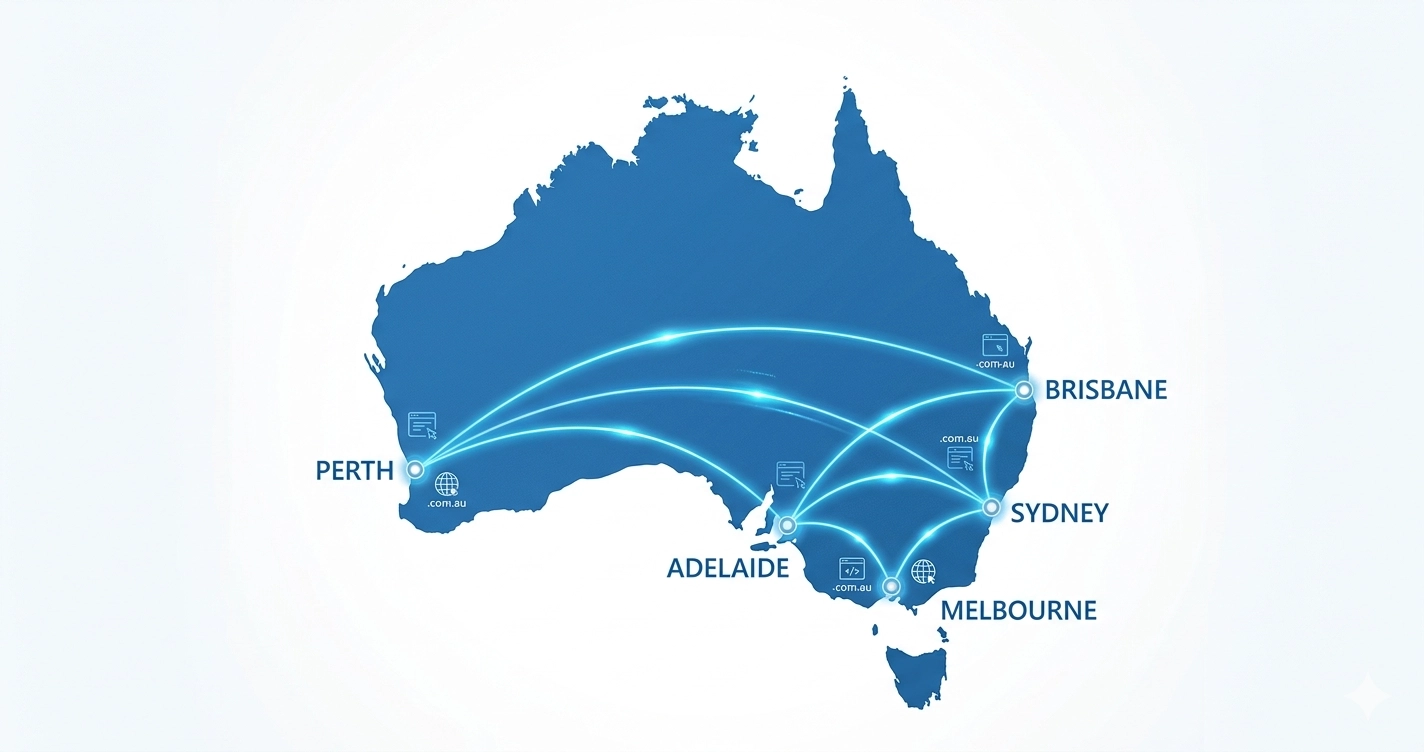
When someone tells you that you “just need more backlinks,” they’re technically right but it’s not the whole story. Getting backlinks in Australia is a different game compared to the US or UK. The market is smaller, the quality bar is actually higher in many niches, and Google has become very sharp at spotting link profiles that look manufactured.
This guide covers what Australian backlinks actually are, why they matter, the different types worth building, and the mistakes that consistently set businesses back. No fluff, no hard sell. Just what you need to know.
What Makes a Backlink “Australian” in the First Place?
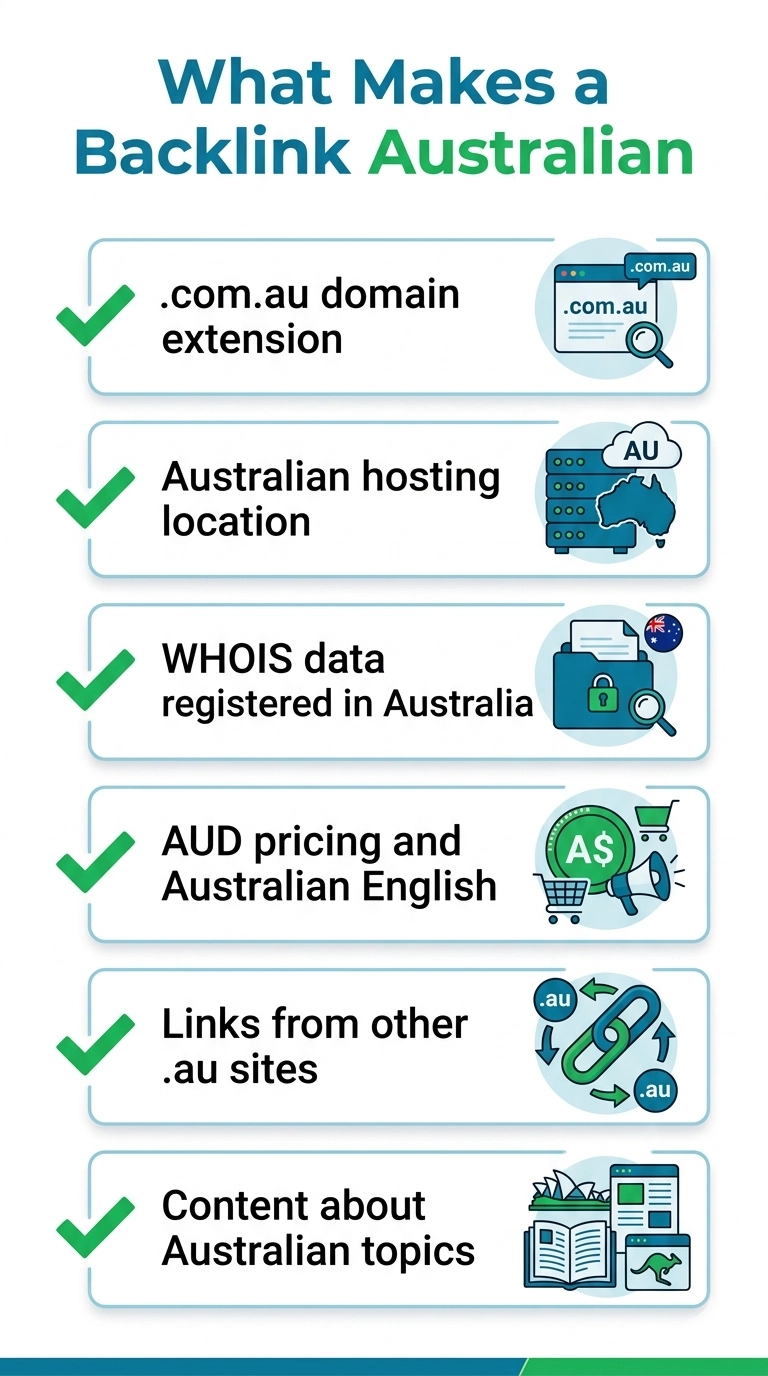
It’s not just about having a .com.au domain. An Australian backlink is a link from a website that genuinely serves an Australian audience real traffic, real content, and geographic signals that Google can verify.
Google uses a combination of signals to determine where a website operates. These include domain extension (obviously), hosting location, WHOIS data, content language and currency references, internal linking patterns, and the geographic spread of inbound links. A .com.au site is usually Australian, but a regular .com site can rank as Australian too if all these signals point that way.
So when people say “get Australian backlinks,” what they really mean is: get links from websites that Google recognises as part of the Australian web ecosystem. The domain extension is just one piece.
Why Australian Backlinks Matter More Than You Might Think
If your business targets Australian customers whether you’re a Sydney law firm, a Melbourne e-commerce store, or a Brisbane tradie your backlink profile needs to reflect that geography. Here’s the real reason why.
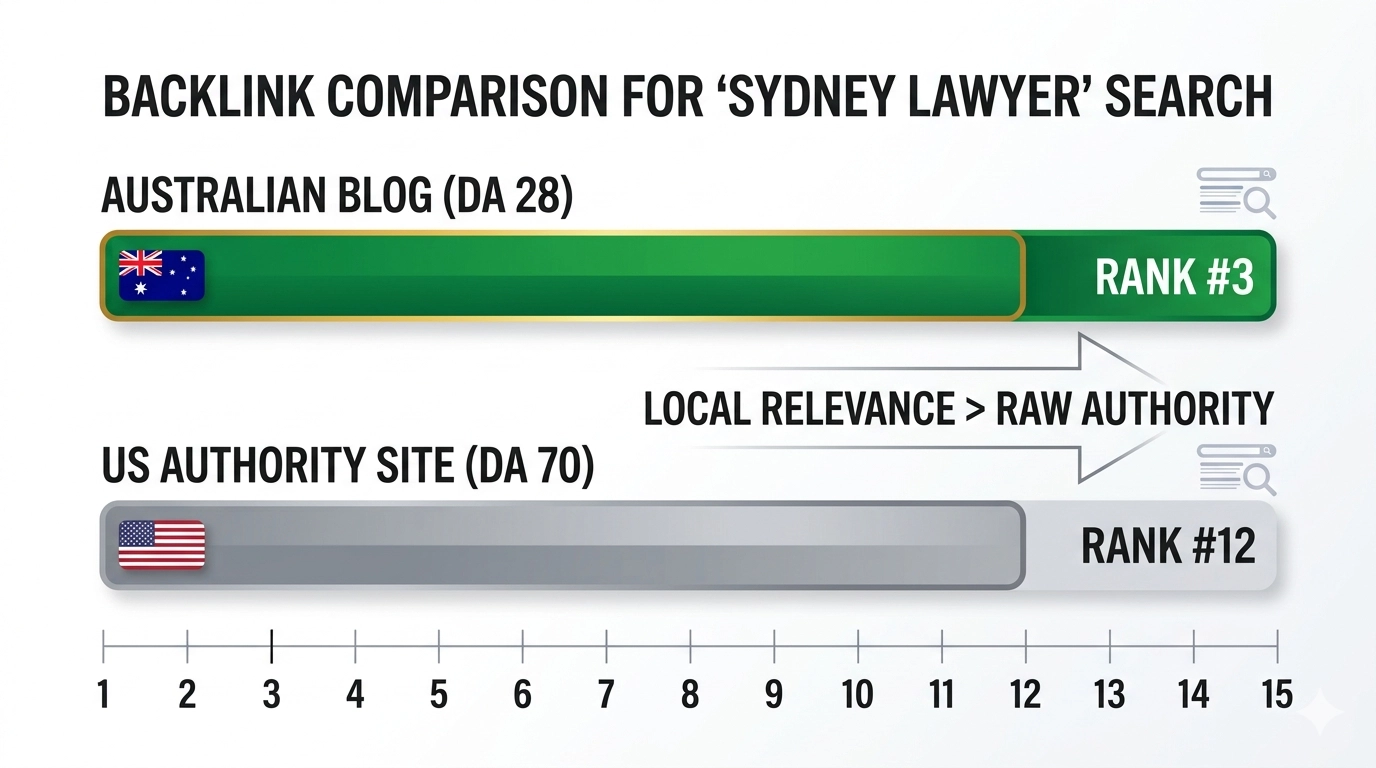
Google’s local ranking algorithm gives serious weight to local authority. A DA 28 Australian industry blog can outrank a DA 70 American website for the same keyword when the searcher is in Australia. Geographic relevance is a signal. When Google sees that a collection of trusted Australian websites are linking to you, it interprets that as a vote of confidence from within the local web community.
There’s also a trust element for Australian users themselves. People searching in Australia are more likely to click on and stay on a website that reads as locally credible. That isn’t just about .au domains, but it’s part of the picture.
And practically speaking: your competitors are building Australian backlinks. If they have 60 solid links from Australian news sites, blogs, and directories and you have 300 random links from generic US content farms, you are going to lose in most Australian SERPs. The gap is real and consistent.
The Different Types of Australian Backlinks (and Which Ones Are Worth It)
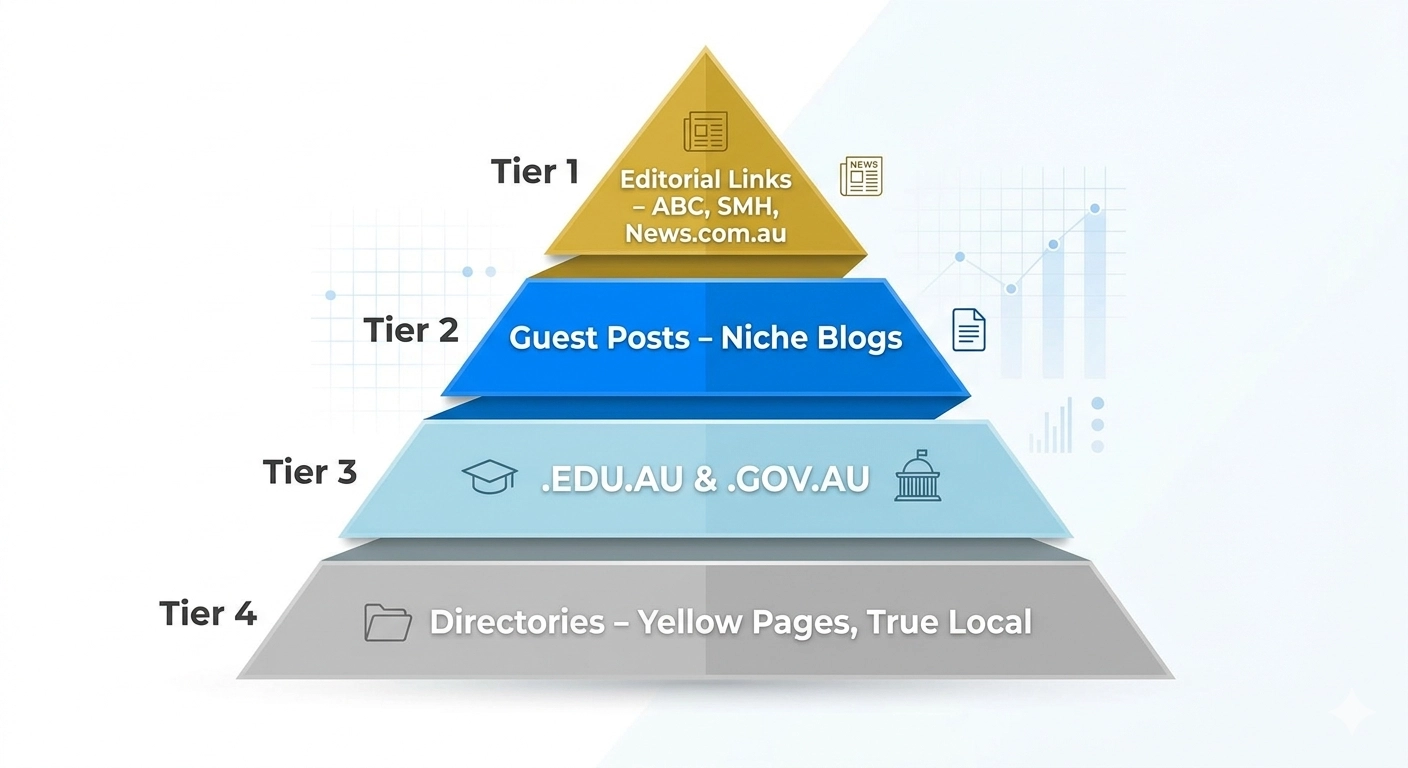
Not all links are created equal. Here’s an honest breakdown of the major types and where each one actually delivers value.
Editorial Links from Australian Publications
This is the top of the pyramid. Think ABC News, news.com.au, The Australian, The Sydney Morning Herald, Business Insider Australia, Smart Company. A single link from one of these outlets carries enormous authority.
Getting editorial links from major Australian publications usually requires one of three things: you’ve done something genuinely newsworthy, you’ve produced an original piece of research or data that journalists can cite, or you’ve made yourself available as a credible expert source for an ongoing story. None of these are quick wins. But the payoff is significant and the link value lasts.
Guest Posts on Australian Niche Blogs
A well-placed guest post on an Australian finance, health, legal, or tech blog can push rankings noticeably especially if the blog has real readership and isn’t just a link farm in disguise. The problem is that a huge proportion of “Australian blogs” accepting guest posts are low-quality paid placement sites with inflated metrics and almost no real traffic.
If you can’t find the blog through a normal Google search, if the authors have no real profiles, or if the writing quality is uniformly terrible across articles, those are all red flags. Real blogs with real audiences do exist in every niche in Australia. Finding them takes more effort, but the results are worth it.
Australian Business Directory Listings
These won’t win you the top ranking on their own, but they’re an important baseline. Yellow Pages Australia, True Local, Yelp AU, HotFrog, StartLocal, Oneflare, Whereis – these are the Australian citation sources that tell Google your business is legitimately operating in Australia.
Think of directories as laying the foundation rather than building the house. They help verify that you’re a real local business, which strengthens the context of your other link building. Most businesses can cover the main ones in a single afternoon.
.gov.au and .edu.au Backlinks
These are the most coveted links in Australian SEO. A single .gov.au link can carry more weight than twenty commercial links because of the extreme trust Google places on government and educational domains.
Getting them legitimately is slow but possible. Australian government websites sometimes link out to resources, tools, or businesses through grant directories, supplier lists, and resource pages. Universities will occasionally link to industry research, white papers, or alumni businesses. If you have any legitimate angle into this space – through a professional body, through contributing research, through government supplier registration – it’s worth pursuing.
Niche Edit / Link Insertion on Existing Australian Content
This is probably the most underrated tactic. Find an existing, indexed, aged article on an Australian website that’s relevant to your niche, and have a link to your site added naturally within the content. When done properly – real sites, genuinely relevant context – these links carry strong topical signals.
The risk is buying link insertions on dead or low-traffic pages that look real but aren’t. Always check actual traffic data, not just Domain Rating.
How to Judge Whether an Australian Backlink Is Actually Good
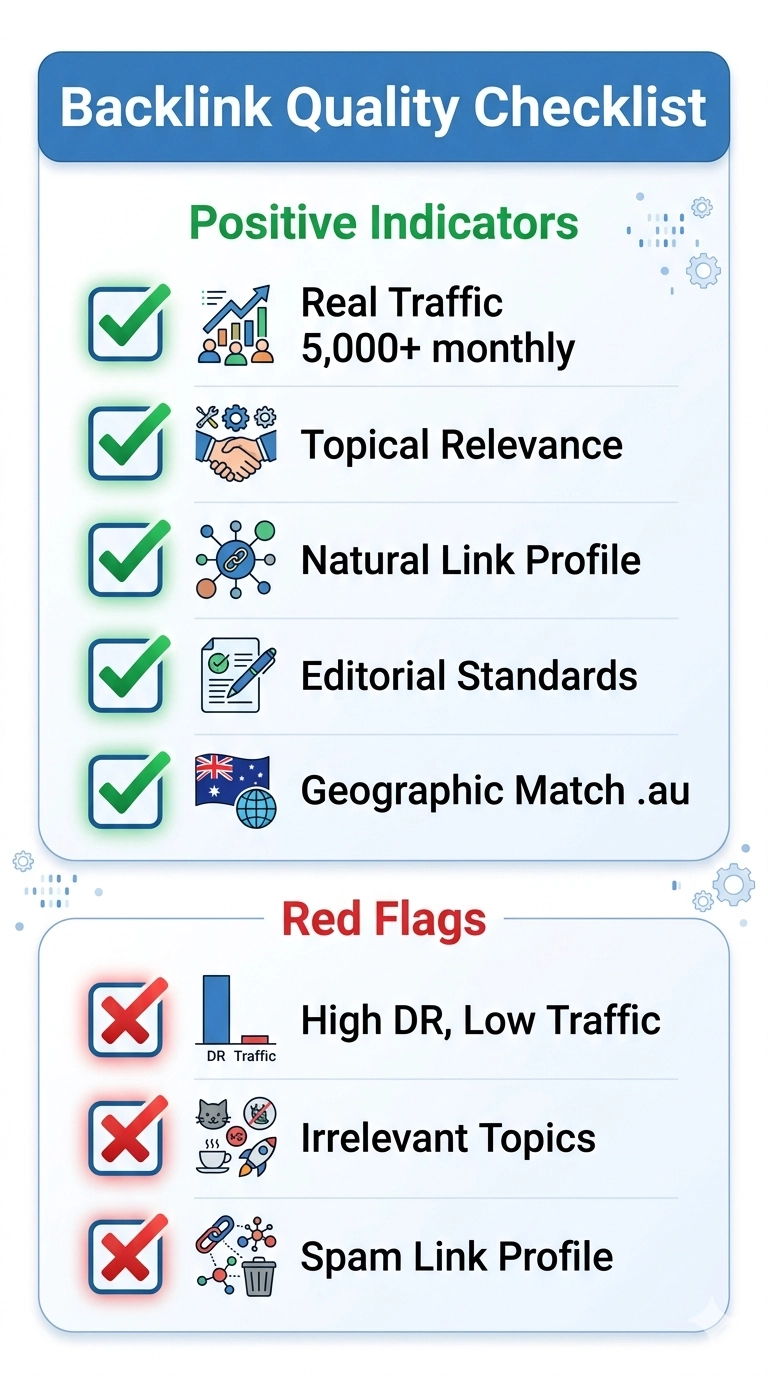
Domain Authority and Trust Flow are useful reference points, but they’re third-party metrics. Google doesn’t use them. What Google actually cares about is whether a site has real traffic, real content, real editorial standards, and a natural link profile itself.
Before acquiring any link, check the site’s estimated traffic in Ahrefs or Semrush. If a site has a DR of 45 but only 200 organic visits per month, something is wrong. Either the metrics are inflated, the traffic dropped after a penalty, or the site never had real readers to begin with. None of those scenarios make for a valuable backlink.
Also check the topical relevance. A link from an Australian cooking blog to your accounting firm’s website is geographically relevant but topically random. Google evaluates both signals. The ideal link is both local and topically aligned.
How Many Australian Backlinks Do You Actually Need?
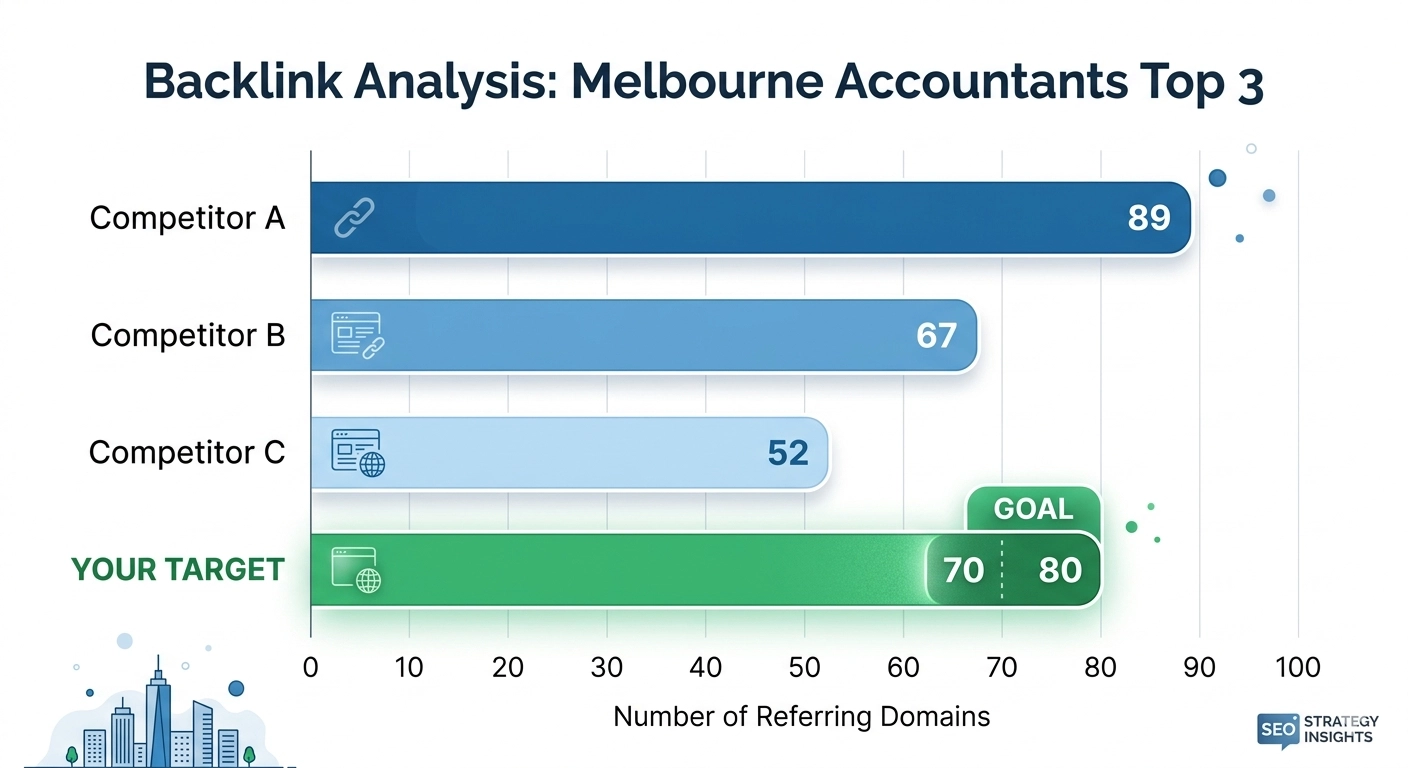
This is where most guides go vague. The real answer depends entirely on your competition.
The quickest way to figure this out: export your top 3 competitors’ backlink profiles in Ahrefs or Semrush, filter by Australian-origin referring domains specifically, and count the unique domains. That gives you a rough target. You want to be within 20–30% of the leader’s referring domain count, with similar or better average site quality.
A local plumber in Cairns might need 15–20 strong local links to dominate their area. A finance comparison website trying to rank nationally for competitive terms might need 200+ referring domains across Australian media, industry publications, and niche blogs. There’s no universal number. Look at what’s working for whoever is already ranking.
The Backlink Building Mistakes That Actually Hurt Australian Websites
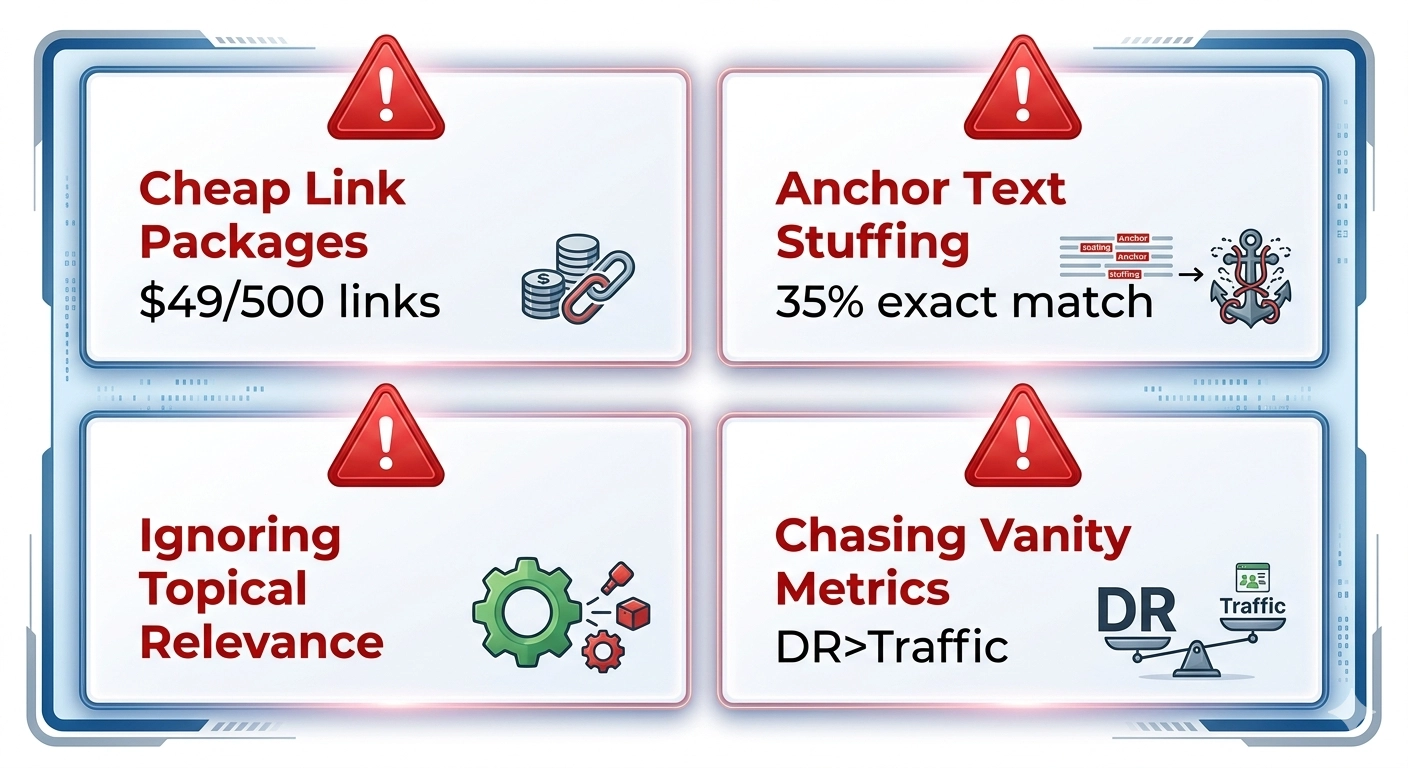
Buying cheap link packages with no geographic filter. You’ll see these all the time: “500 backlinks for $49” or “DA 40+ links guaranteed.” Almost none of them are Australian, almost none of them are topically relevant, and a good chunk are from networks that Google has already devalued or flagged. Short-term rankings boost followed by a slow fade is the typical pattern.
Over-optimising anchor text. If 35% of your inbound links all use the exact phrase “plumber Melbourne,” that pattern is not normal. Real backlink profiles have a mix of branded anchors (your business name), generic anchors (“click here,” “this article”), naked URLs, and yes, a few keyword-rich phrases but they’re spread out naturally. Aggressive anchor text optimisation is a common reason businesses plateau and then slowly drop.
Ignoring topical relevance in favour of raw metrics. A high-DR Australian site that covers celebrity gossip is not useful for your cybersecurity consultancy. Geographic relevance and topical relevance both matter. Focus on sites that serve your actual audience, not just sites with impressive-looking numbers.
Chasing vanity metrics. A DA 60 site with 400 monthly visitors is less valuable than a DA 35 site with 12,000 monthly visitors and a highly engaged niche audience. Traffic is a better proxy for real-world link value than any single metric.
What Quality Backlinks in Australia Look Like in 2026
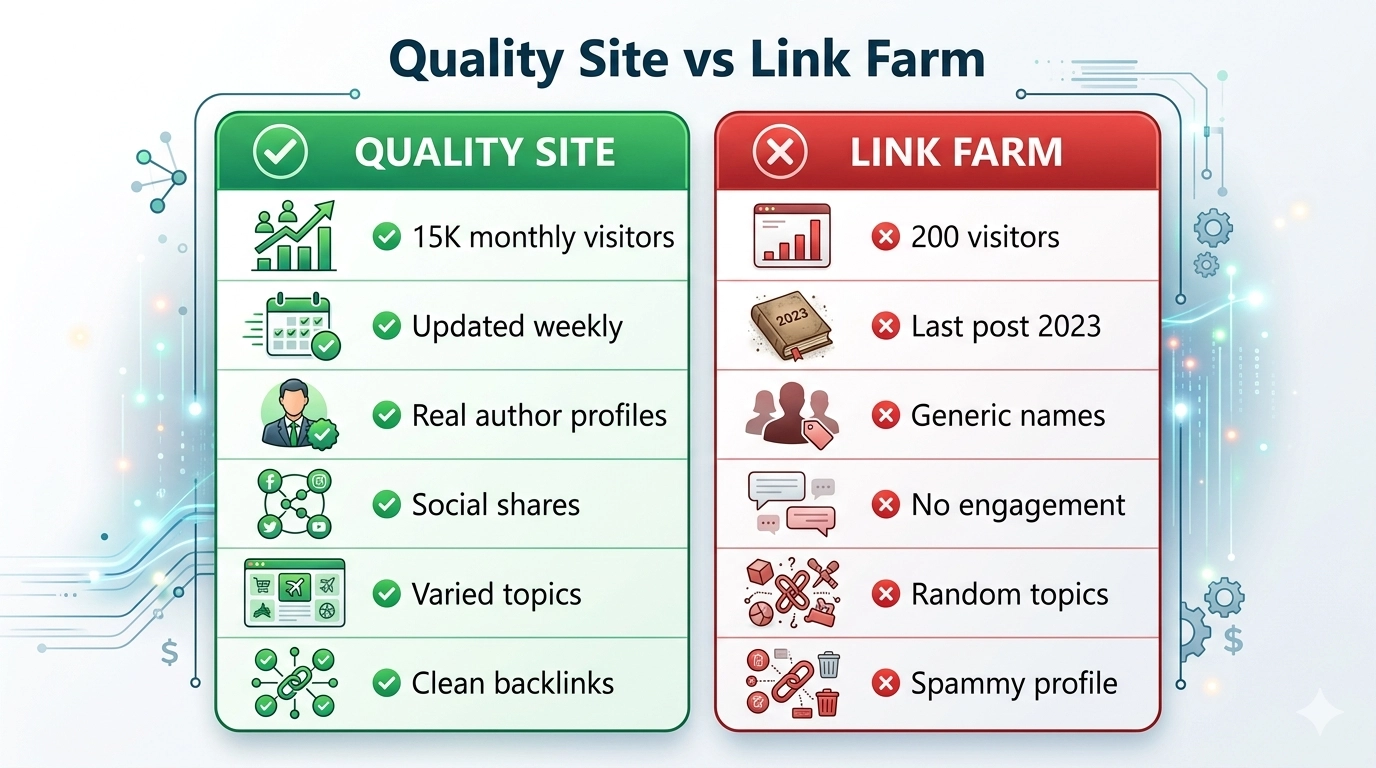
The definition of a quality Australian backlink hasn’t shifted dramatically; it’s a link from a real, actively maintained website that covers topics relevant to your niche, has genuine readership and organic traffic, links out to other quality sources, and isn’t clearly operating as a paid link depot.
What has changed is the volume of junk masquerading as the real thing. There are now thousands of Australian-looking websites that are essentially content factories with inflated metrics, accepting paid placements with no real editorial judgment. They’re not hard to spot if you know what to look for but they’re easy to fall for if you’re just checking the DA and calling it done.
Quality backlink building in Australia in 2026 means being selective, prioritising relationships over transactions where possible, and thinking long-term. The sites that rank consistently in competitive Australian markets almost always have a backlink profile that looks like it was built slowly, deliberately, and with some actual regard for relevance.
Quick Summary
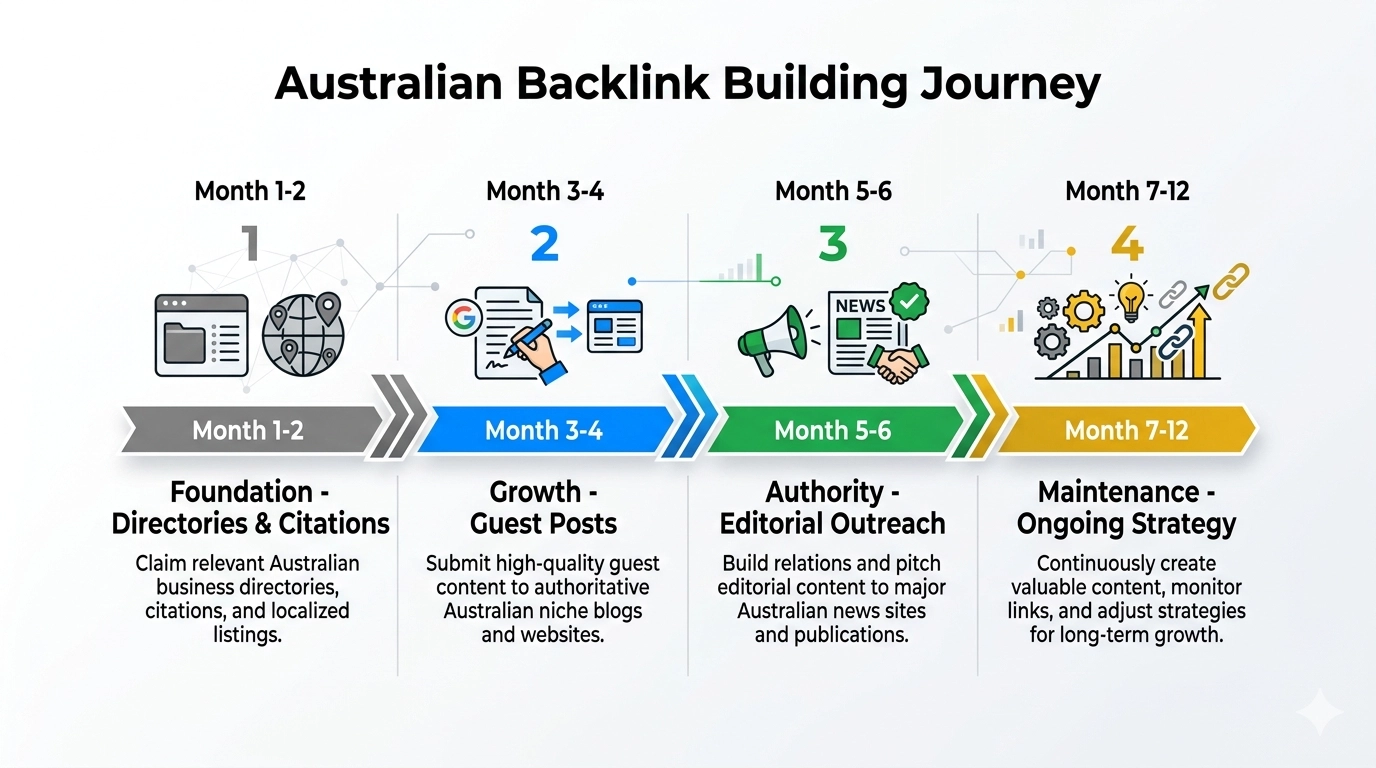
Australian backlinks are links from websites that Google recognises as part of the Australian digital ecosystem. They matter because geographic relevance is a real ranking signal, especially for businesses targeting Australian customers.
The highest-value types are editorial links from major Australian publications, genuine niche blog placements, .gov.au and .edu.au links, and quality niche edits on relevant existing content. Directories still matter but as a foundation, not a strategy on their own.
Quality beats quantity always. Check traffic, not just DR. Check relevance, not just domain extension. And figure out what your actual competitors have before you decide how many links you need.
If you’re looking for a link building partner that actually knows the Australian market and can deliver on the above, LinkingOz specialises in exactly this vetted Australian placements, niche-specific targeting, and transparent reporting on every link acquired.